

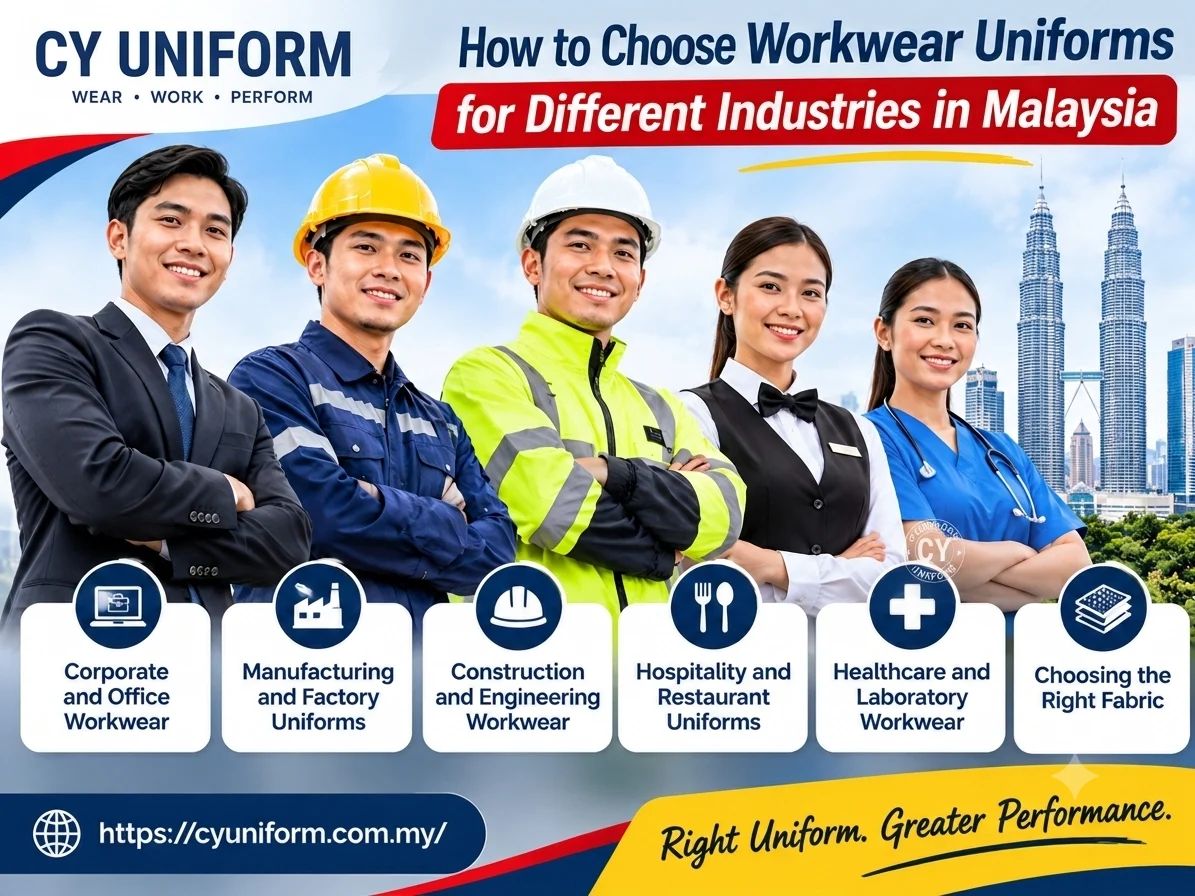
Choosing the right uniform for your employees is not simply about picking a shirt colour or adding a company logo. A good workwear uniform should be comfortable enough for employees to wear throughout the day, practical for the job they perform and professional enough to represent the company.
In Malaysia, where employees may work in offices, factories, workshops, restaurants, warehouses and outdoor environments, one type of uniform does not suit every workplace. The fabric, design, fit and features should match the working environment.
Whether you are ordering uniforms for a small team or a large workforce, working with an experienced Workwear Uniforms Supplier Malaysia can make the process easier and help you choose uniforms that are suitable for your industry.
Why Choosing the Right Workwear Matters
Employees spend many hours in their uniforms. If the clothing is uncomfortable, too warm or difficult to move in, it can affect their working day.
At the same time, uniforms are part of a company’s image. Employees who meet customers, suppliers or visitors are often one of the first points of contact with the business. A neat and consistent uniform can create a more organised and professional impression.
For industrial workers, however, appearance is only one part of the decision. Durability, ease of movement and suitability for the working environment are equally important.
This is why businesses should consider the actual job requirements before placing a uniform order.
1. Corporate and Office Workwear
Office employees usually need uniforms that look smart without feeling too formal or uncomfortable.
Corporate shirts, polo shirts, blouses, jackets and other professional styles can work well for office teams, customer service staff and sales employees.
For these uniforms, consider:
• Breathable and comfortable fabrics
• A professional colour combination
• A suitable fit for different body types
• Clear and neat logo placement
• Easy-care materials for regular washing
If employees meet customers regularly, the uniform should also complement the company’s branding. Simple details such as embroidered logos, matching colours and consistent styling can make a noticeable difference.
2. Manufacturing and Factory Uniforms
Factory environments place different demands on workwear. Employees may spend long hours standing, moving around machinery or handling materials.
In this setting, durability becomes a major consideration.
Factory uniforms may include work shirts, trousers, technician uniforms, jackets or coveralls depending on the type of work being carried out.
Look for materials and construction that can handle regular use and washing. Reinforced stitching, practical pockets and comfortable cuts can also be useful for employees who are constantly moving.
3. Construction and Engineering Workwear
Construction and engineering employees often work outdoors or in physically demanding environments. Their uniforms need to allow easy movement while standing up to regular wear.
Depending on the nature of the work, businesses may consider:
• Durable fabrics
• Practical pockets
• Comfortable cuts
• Long-sleeve options
• Reflective details where appropriate
• Easy-to-identify company branding
The uniform should never restrict movement. Employees need to bend, stretch, walk and carry equipment comfortably during their working day.
4. Hospitality and Restaurant Uniforms
For restaurants, cafés and hotels, uniforms play an important role in customer perception.
Different teams may require different styles. Chefs may need chef jackets and aprons, while service staff may wear branded shirts, polo shirts or other coordinated attire.
Because hospitality employees can spend hours working in warm environments, breathable and easy-to-maintain fabrics are particularly useful.
The design should also suit the establishment. A casual restaurant may choose a simple polo and apron combination, while an upscale hotel may prefer a more formal appearance.
5. Healthcare and Laboratory Workwear
Healthcare and laboratory environments have their own requirements. Staff uniforms should look clean and professional while being comfortable enough for employees who may move around throughout the day.
Depending on the role, suitable options may include lab coats, work shirts, specialised uniforms or other professional garments.
When selecting healthcare or laboratory workwear, think about how frequently the uniforms will be washed and whether the fabric can maintain its appearance after repeated use.
6. Logistics, Warehouse and Delivery Teams
Employees working in logistics, warehouses and delivery services often move between indoor and outdoor environments.
Their uniforms should be practical and easy to identify. Polo shirts, work shirts, jackets and other durable options can be considered depending on the job.
For outdoor teams, lightweight and breathable fabrics can make the uniform more comfortable, particularly in Malaysia’s warm weather.
If employees work around vehicles or in areas where visibility is important, additional visibility features may also be appropriate depending on the working conditions.
7. Choosing the Right Fabric
Fabric is one of the most important decisions when ordering workwear.
Cotton can provide a soft and breathable feel, making it suitable for many everyday work environments. Cotton blends can offer a balance between comfort, durability and easier maintenance.
For industrial work, heavier and more durable fabrics may be more suitable, while employees working outdoors may benefit from lighter materials.
Rather than choosing fabric based only on price, consider how and where the uniform will be used. A slightly higher initial cost may be worthwhile if the uniform lasts longer and remains comfortable after repeated washing.
8. Don’t Forget the Fit
Even a high-quality uniform will not work well if the fit is wrong.
Companies should consider different sizes and cuts for their employees rather than ordering everything in a single standard fit.
Before placing a large order, it is a good idea to confirm measurements and, where possible, review a sample. This can help identify problems with sizing, sleeve length, collar style or overall comfort before production begins.
9. Add Branding Carefully
Your uniform is also a branding opportunity.
A company logo can be added through embroidery or printing depending on the garment and the desired appearance.
Keep the branding clean and easy to recognise. The logo does not need to be oversized to attract attention. A well-positioned logo on the chest, sleeve or back can provide a professional finish.
Choose a Supplier That Understands Your Industry
The supplier you choose can have a major impact on the final result. A supplier experienced in different types of workwear can help you select appropriate fabrics, designs and customisation options instead of simply selling you a standard uniform.
CY Uniform has been supplying workwear and corporate uniforms in Malaysia since 2008, with experience covering both light and heavy industries. The company also offers ready-made and custom-made uniforms, giving businesses flexibility depending on their requirements.
Before confirming an order, discuss your employee roles, working conditions, quantity, preferred fabric, branding and expected delivery timeline with the supplier.
Conclusion
There is no single workwear uniform that works for every Malaysian business. An office team, factory worker, chef and delivery driver all have different needs.
The best uniform is one that suits the job, feels comfortable, lasts through regular use and represents the company in a professional way.
By considering the working environment, fabric, fit, functionality and branding before ordering, businesses can make a more informed choice and avoid replacing unsuitable uniforms too soon.
If you are looking for a Workwear Uniforms Supplier Malaysia, CY Uniform can help you explore ready-made and custom uniform options based on your industry’s requirements.
Frequently Asked Questions
1. What should I consider when choosing workwear uniforms?
Consider the employee’s job, working environment, fabric, comfort, durability, sizing, branding and how frequently the uniform will be washed.
2. Which fabric is best for workwear in Malaysia?
There is no single best fabric for every industry. Breathable fabrics can be suitable for warm environments, while heavier and more durable materials may be better for industrial work.
3. Can workwear uniforms be customised with a company logo?
Yes. Depending on the garment, logos can usually be added through embroidery or printing.
4. Should different departments have different uniforms?
They can. Different uniforms can make it easier to identify departments and ensure that employees receive clothing suited to their specific responsibilities.
5. Is custom-made workwear better than ready-made uniforms?
It depends on your requirements. Ready-made uniforms can be convenient for standard needs, while custom-made uniforms provide greater control over design, fabric, colours and fit.
6. How do I choose the right uniform supplier in Malaysia?
Look for a supplier with experience in your industry, a good range of fabric and uniform options, customisation capabilities, reliable production and the ability to support future reorders.
7. Where can I find a Workwear Uniforms Supplier Malaysia?
CY Uniform provides corporate and workwear uniform solutions for businesses in Malaysia, including uniforms for light and heavy industries.